This is Holland - But You Could Have Guessed That
Imagine suddenly waking up and did not know where you were or how you got here. You look around and see the canals, the bicycles, the narrow houses, and the windmills.
Even without a map or a sign, you would know you were in Holland.
That feeling of place – specific, recognizable, and genuine – is what made this trip stand out. In just a few days, we visited four very different Dutch communities: Kinderdijk, Rotterdam, Amsterdam, and Utrecht. Each one offered something distinct. Together, they gave a remarkably complete picture of what the Netherlands is actually like.
Kinderdijk - More than a Postcard
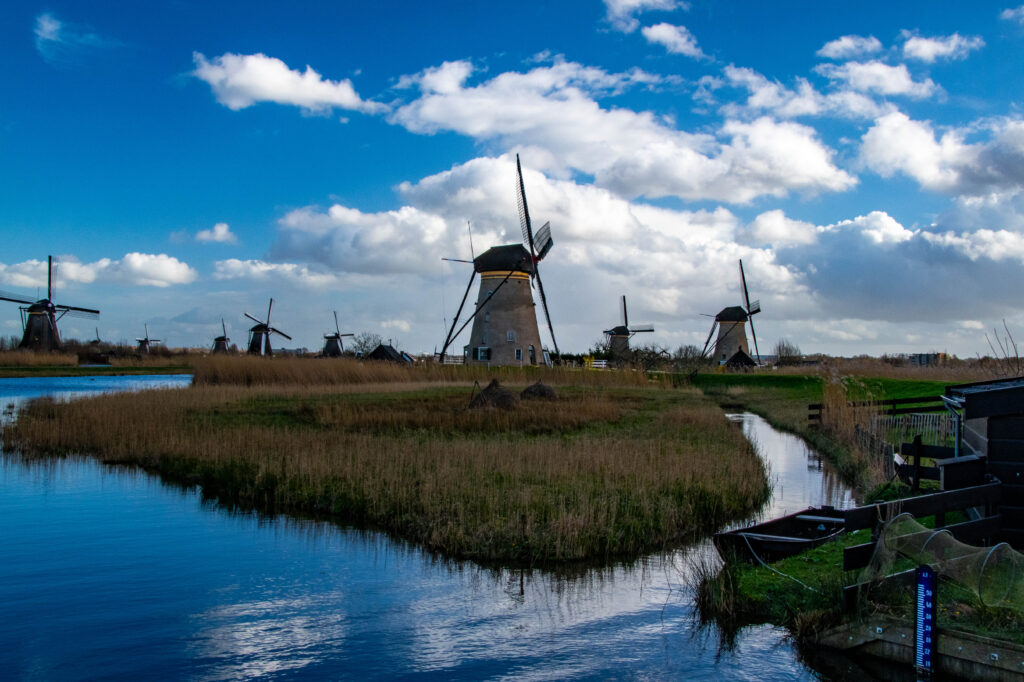
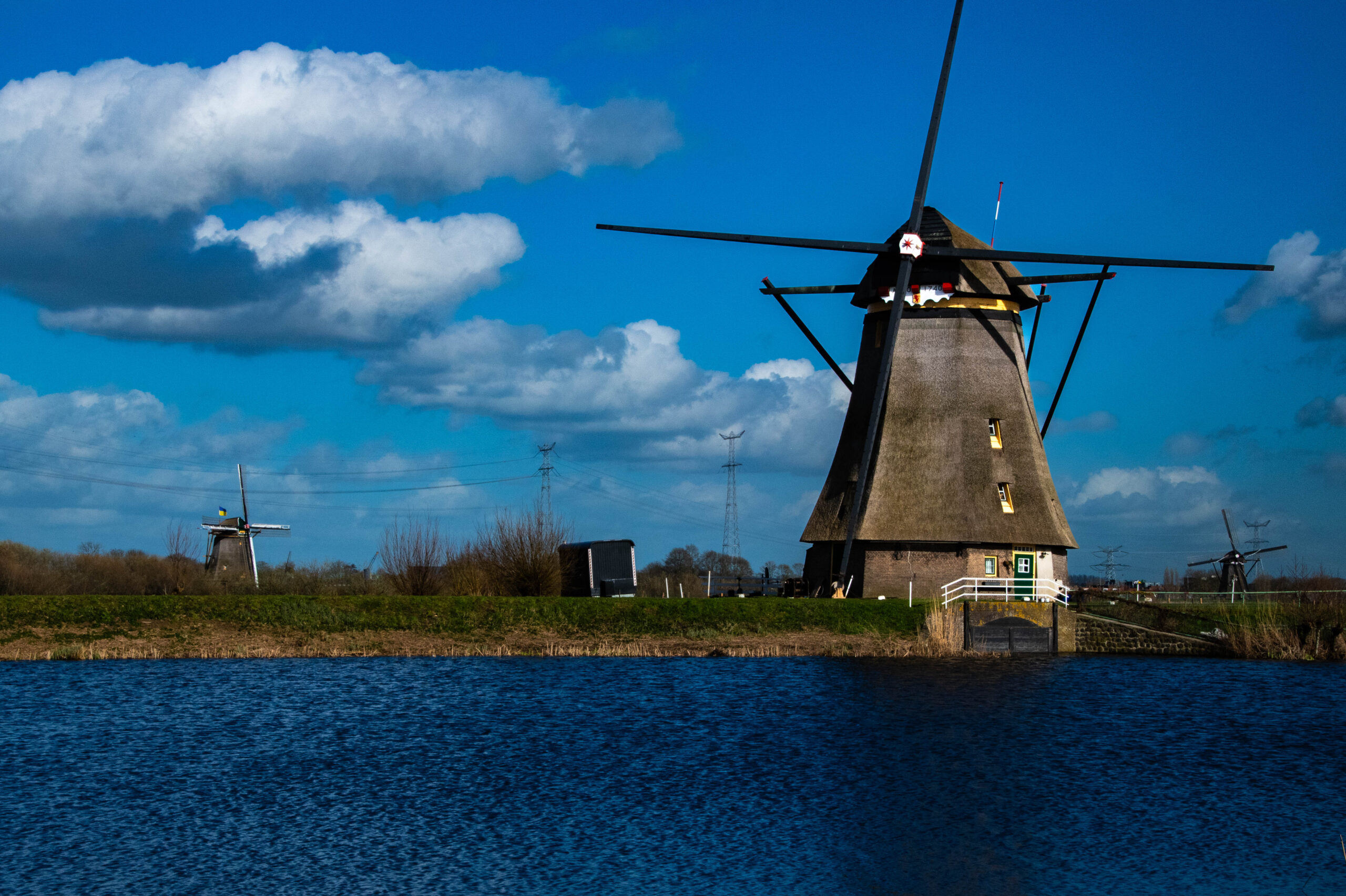
Most people know Kinderdijk from photographs — 19 windmills arranged along a network of canals, a UNESCO World Heritage Site, and one of the most photographed landscapes in Europe. What the photographs don’t tell you is the story behind them.
The windmills at Kinderdijk weren’t built for decoration. These aren’t monuments. They were built out of necessity, and they were someone’s home. This region of the Netherlands sits below sea level, and without a carefully engineered system of water management, it would simply flood. The windmills were part of that system — pumping water from the lower polders into the canals and eventually out to sea. It is an engineering solution developed hundreds of years before modern technology, and it worked.
What I found most striking was the human scale of life inside these windmills. Some served as homes for the families who operated them. And these were not small families. A family of 12 could live inside a working windmill. They were basically living inside a functioning machine. Standing inside one and trying to understand how that was possible gives you a new respect for the ingenuity and practicality of the Dutch people.
Insider's Tip: Allow more time here than you think you need. The grounds are fully walkable, and seeing these windmills from different perspectives — from the water, from the path alongside the canals, and up close at ground level — is worth taking slowly. If your cruise offers the option to tour the interior of a windmill, take it.
How Did the Kinderdijk Get its name?
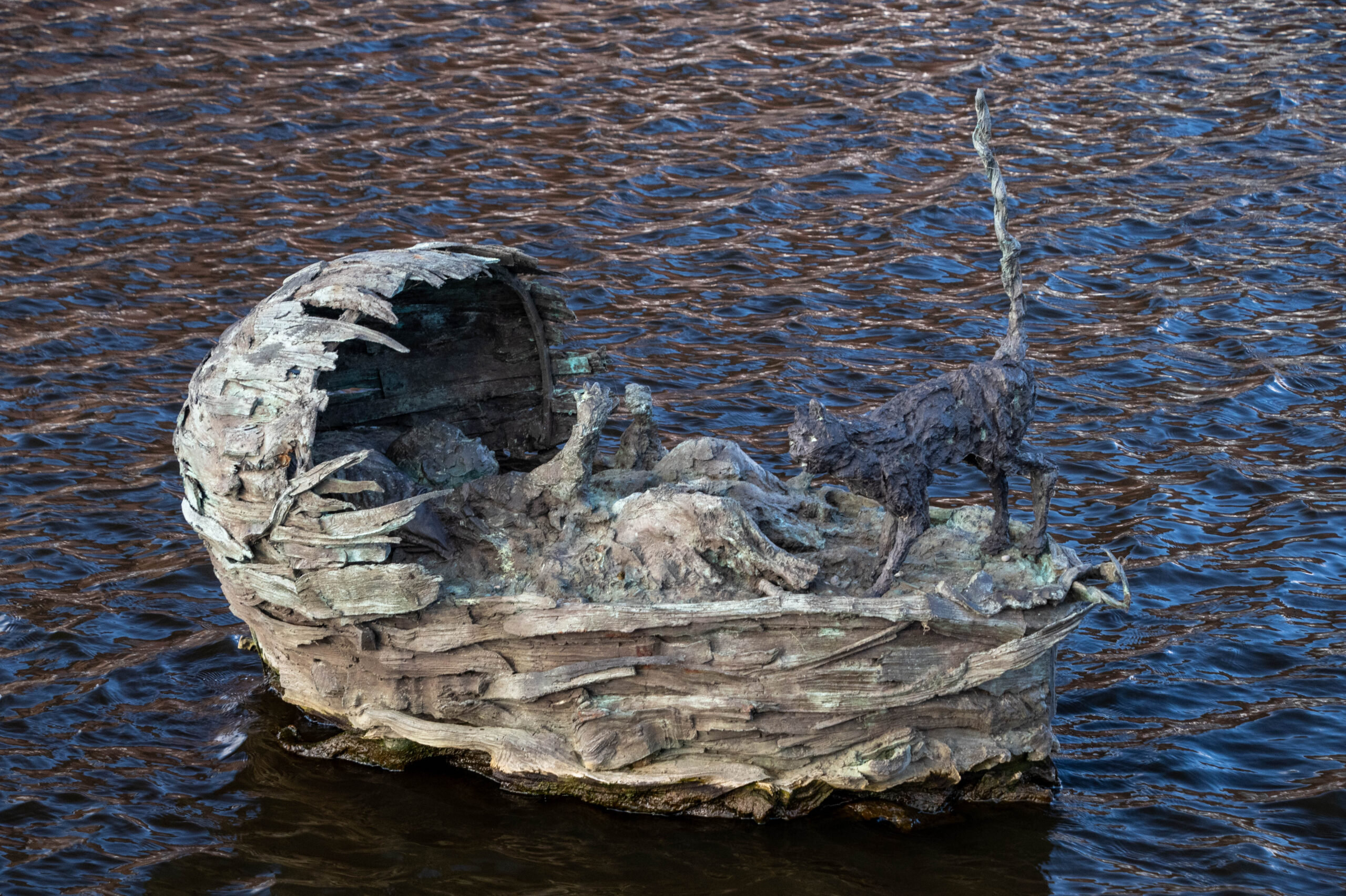
In 1421, a disastrous flood hit this region, known as the St. Elizabeth Flood. Legend is that survivors in the area found a cradle floating in the water, holding a sleeping baby and a cat. The cat wsa apparently jumping from side to side of the cradle to keep it balanced.
Amsterdam - Familiar, but Never Ordinary
This was not my first visit to Amsterdam, which made it easier to simply enjoy the city rather than try to see everything at once. And what Amsterdam rewards, more than almost any European city I’ve visited, is being walked slowly.
We started the day with a canal cruise — an easy way to orient yourself in a city built around water, and a chance to see places like the Anne Frank House from a different perspective. From the water, you understand why the canals are central to Amsterdam’s identity. The city wasn’t built next to the water. It was built around it, because of it, and in many ways because of what the water made possible.
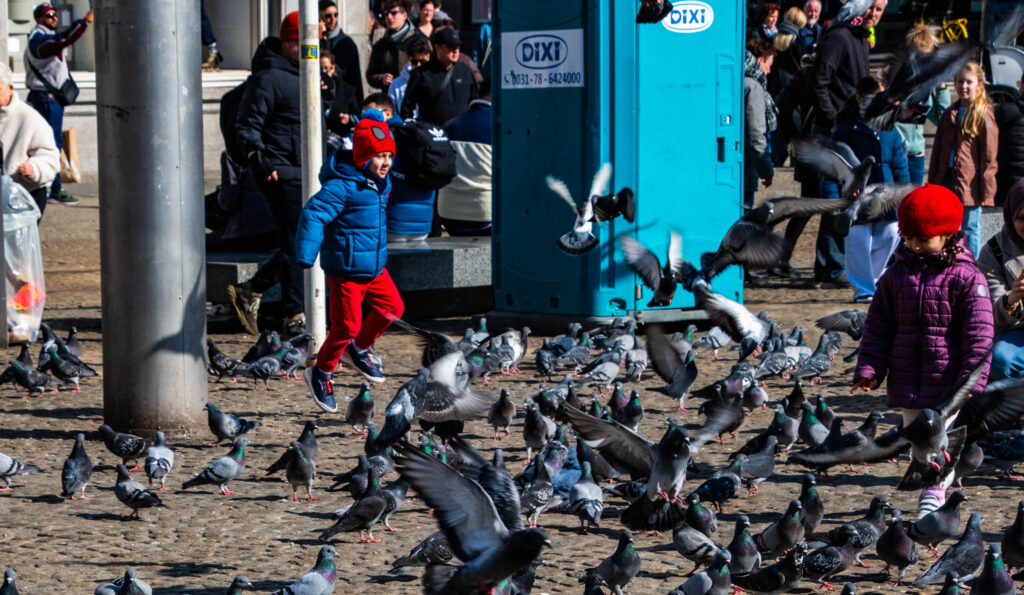
In the afternoon, we walked. Amsterdam’s squares — Dam Square in particular — have a quality shared by the best European town squares: they draw people in. Not because of a single attraction, but because they are places designed for gathering. On a clear afternoon, they feel alive in a way that is hard to replicate anywhere else.
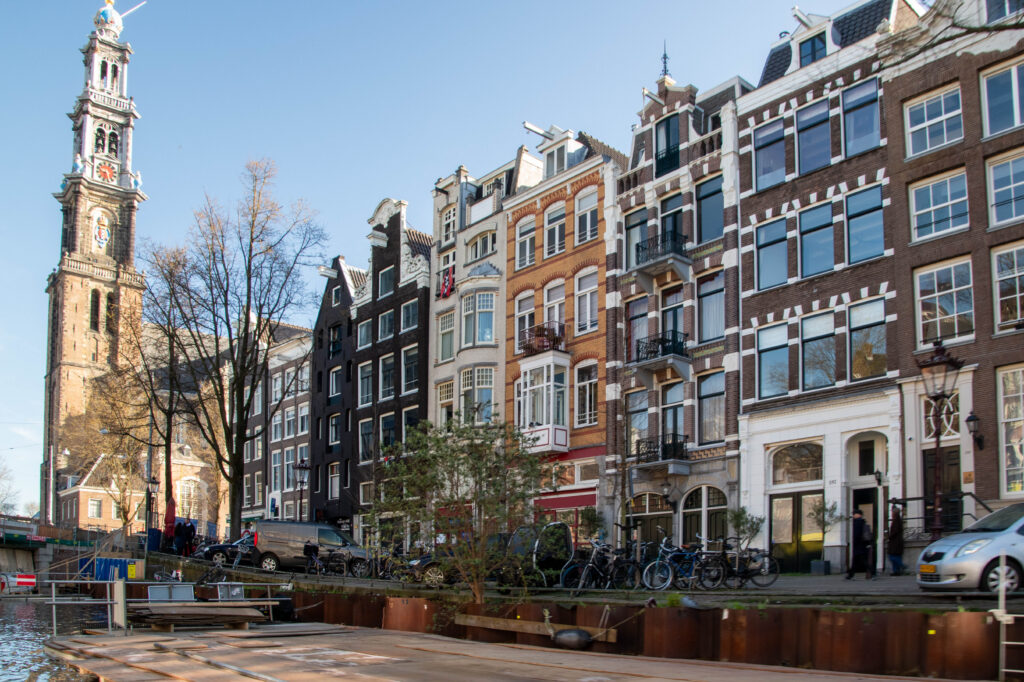
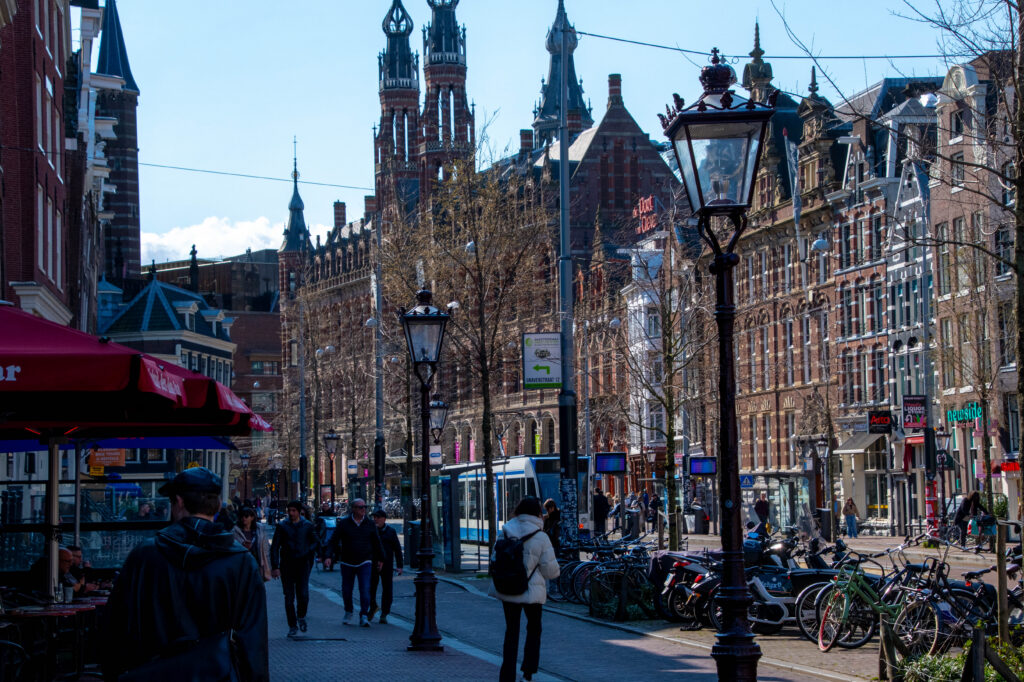
See something unusual in this picture?
Look at the tops of these houses, and you will see a short protruding beam with a hook on it. That is there, because the houses are so narrow that you cannot get large pieces of furniture up the stairways inside the house. The hook is there to hoist the furniture to the upper floors, and then the furniture is brought in through the window.
Once you notice them, you see them everywhere, and each one is a small reminder that this city was built by practical people solving practical problems in remarkable ways.
Rotterdam: A City That Rebuilt on Its Own Terms
Rotterdam is unlike any other city in the Netherlands — or in Europe, for that matter. That’s not an accident.
During World War II, the city was heavily bombed, and much of its historic center was destroyed. What emerged from that destruction was a decision to rebuild not by recreating what had been lost, but by looking forward. Rotterdam became a city of bold, unconventional architecture, and it has never looked back.
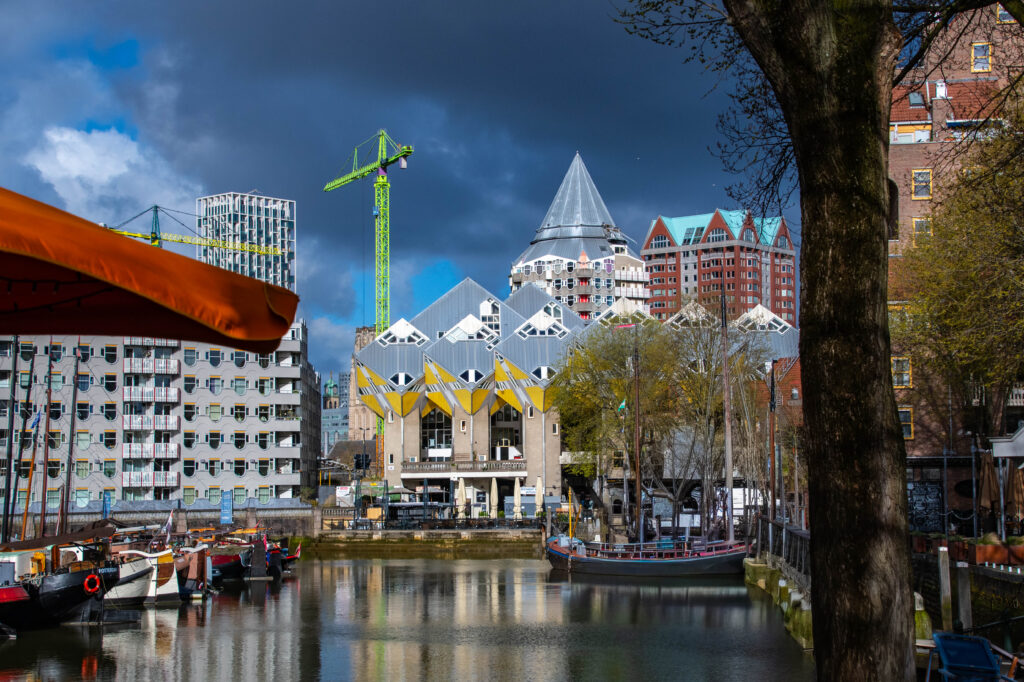
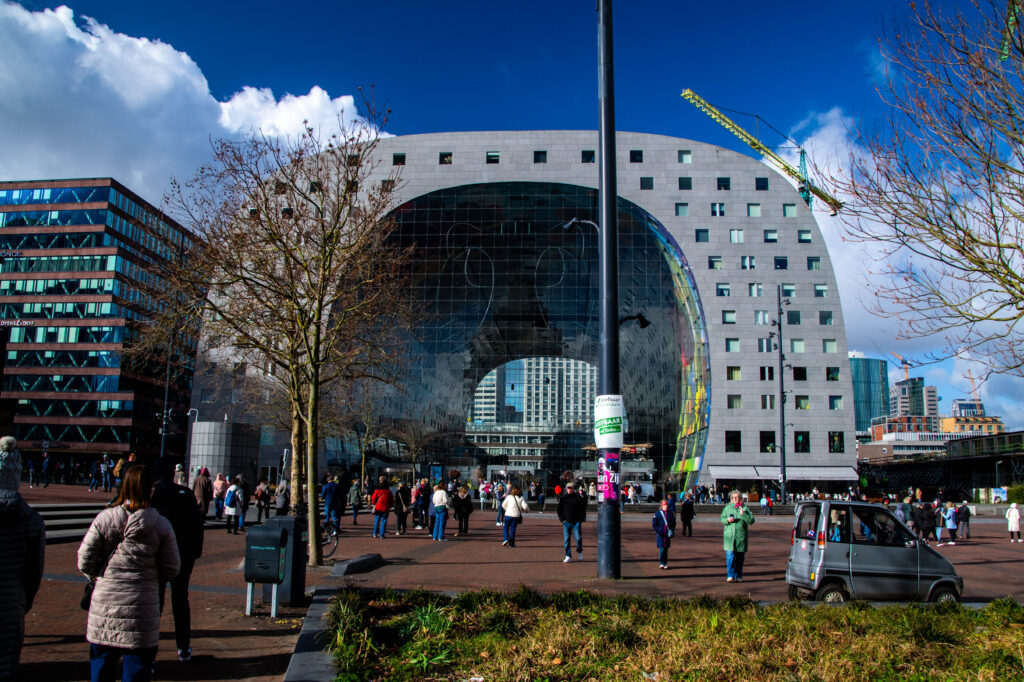
The Cube Houses are the most well-known example — residential homes tilted at 45-degree angles, stacked in clusters above the old harbor, their yellow facades unmistakable from across the water. But they are just one piece of a much larger architectural statement. The Markthal, a massive arched food market with residential apartments built into its shell, is another. Rotterdam feels like a city that continually asks: what if we tried something entirely different?
It’s a contrast worth thinking about. One day earlier, we had been walking among 18th-century windmills. Now we were looking at architecture that would not be out of place in a contemporary design magazine. That range — from centuries-old engineering to thoroughly modern design — is part of what makes the Netherlands genuinely interesting.
Utrecht - The One that Surprised Me Most
Of the four stops on this cruise, Utrecht was the one I knew least going in. It turned out to be a genuine highlight.
Utrecht is a university city — home to one of the oldest and largest universities in the Netherlands — and that shapes everything about it. The city feels younger and more local than Amsterdam, less curated and more lived-in. Students are very much part of the fabric of daily life here, and the energy of the city reflects that.
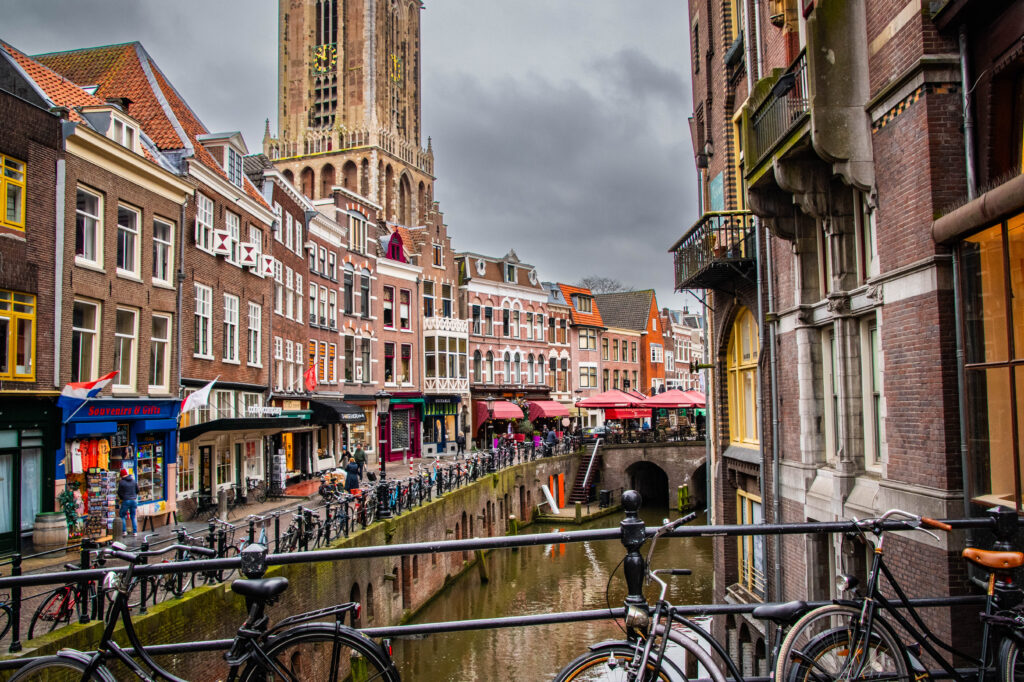
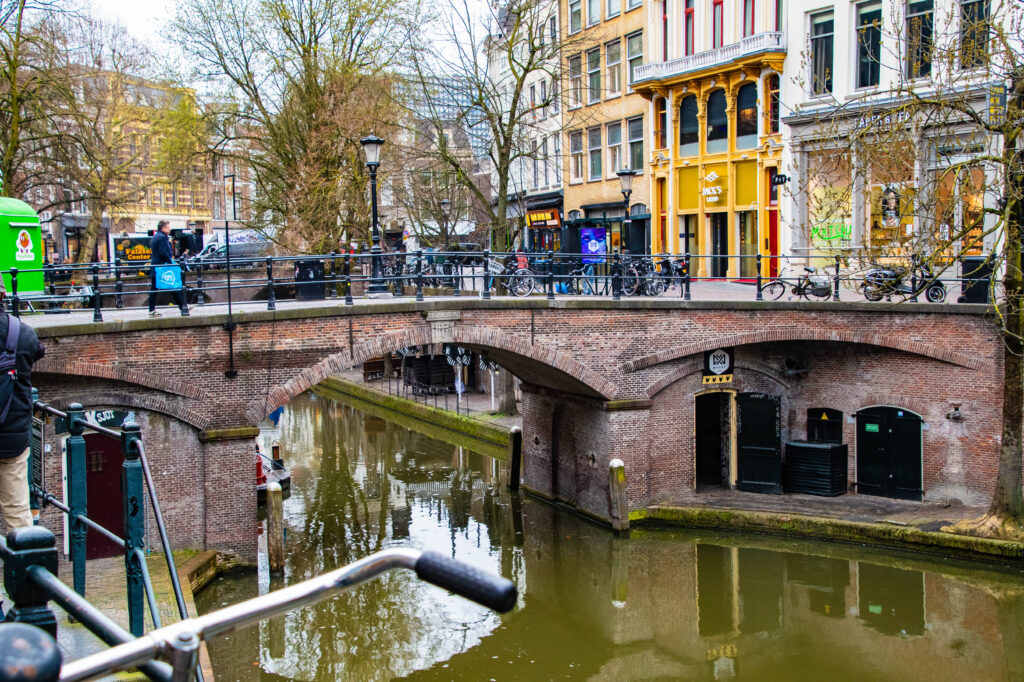
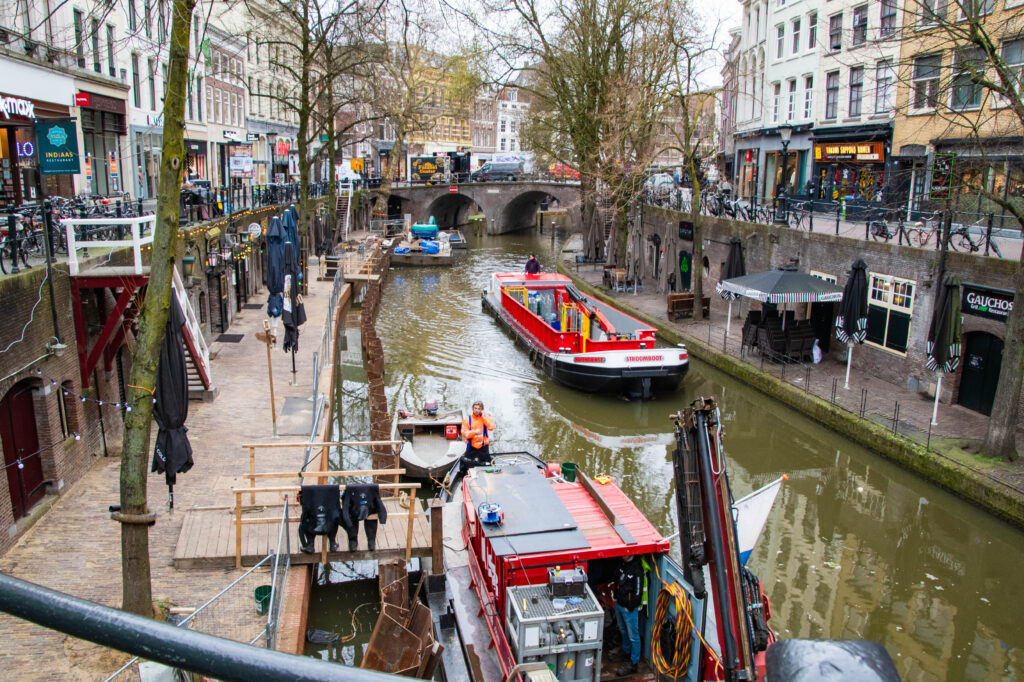
What makes Utrecht’s layout distinctive is its canals. Unlike Amsterdam, where the canals sit at street level, Utrecht’s waterways run below the surrounding streets. This creates a two-level city: the upper world of bicycles, cobblestones, and historic buildings, and the canal-level world of terraces, restaurants, and boats below. The Dom Tower, Utrecht’s medieval cathedral tower, rises above it all — visible from nearly every point in the city center, and a useful landmark when you’re finding your way.
Utrecht struck me as a place that rewards wandering without an agenda. The rhythm of students and locals going about their day, the canal-side terraces, the quiet streets off the main squares — it has an ease to it. It is also, genuinely, a place most visitors to the Netherlands never see. That alone makes it worth the time.
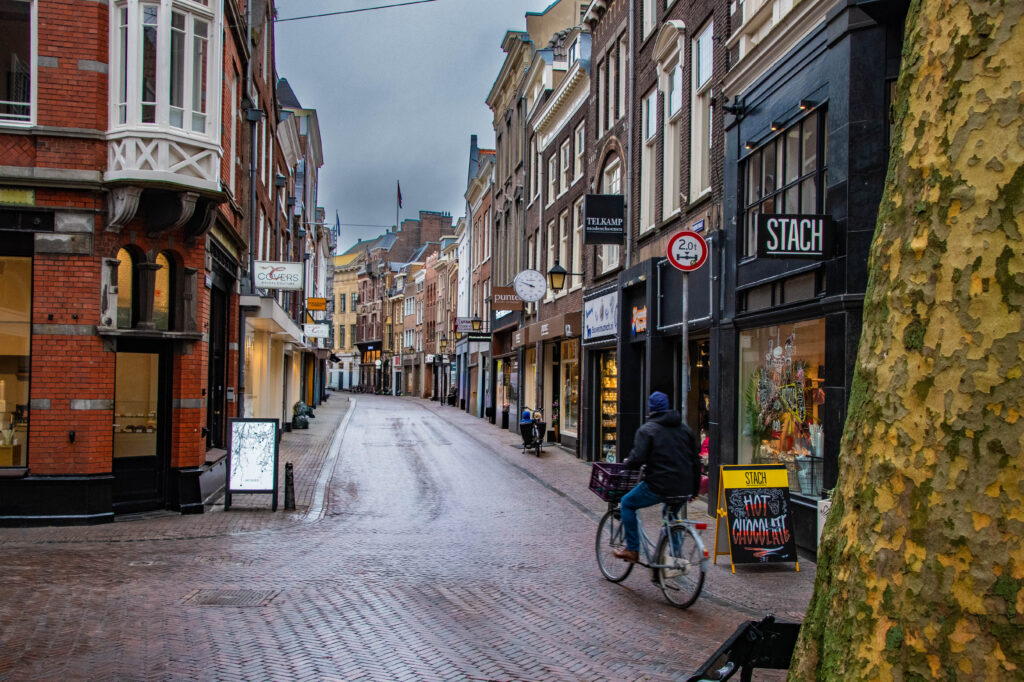
Oh, a word of caution in Utrecht. Bicycles are EVERYWHERE. We even saw a group of grade-school kids on their way for a field trip – all of them riding their own bicycles instead of riding a school bus.
What This Trip Reinforced for Me as a Travel Advisor
The Netherlands confirmed something I find to be true across Europe: the most memorable moments often come from the details that never make it into a brochure. The hooks on the Amsterdam canal houses. The windmill rooms where families of 12 once lived. The way Utrecht’s canals exist one level below the streets, creating a city with two entirely different personalities depending on where you’re standing.
These aren’t headline attractions. But they shape how a place feels, and how you remember it long after you’ve come home.
River cruising, at its best, gives you the time to notice those things. And in a region as compact and varied as the Netherlands, that time pays off.
What a Netherlands River Cruise Actually Delivers
This cruise was a specialty cruise, and you will likely not find one just like this. But, there are options to cruise the canals in both Holland and Belgium. But, a cruise in a relatively smaller geographic area doesn’t mean a limited cruise.
In a few days, you can go from the canals of the Netherlands to the waterways of Belgium. You can see all of the places mentioned here, plus Bruges, Brussels, Antwerp, and Ghent Belgium.
For those who have not taken a river cruise before and want to understand what the experience is like, this is a well-suited starting point. The itinerary is manageable, the destinations are varied and accessible, and the overall pace gives you room to actually absorb what you’re seeing — rather than rushing from site to site.
For those who want a longer journey or broader European exposure, a Rhine or Danube cruise offers greater geographic range. But as an introduction to river cruising — or as a focused, unhurried look at the Benelux region — this itinerary holds its own.
Key Seasonal Temperatures
- Spring (March–May): Average highs of 10–17°C (50–63°F)
- Summer (June–August): Average highs of 18–23°C (64–73°F)
- Autumn (September–November): Average highs of 10–15°C (50–59°F)
- Winter (December–February): Average highs of 3–7°C (37–45°F)
More Information on The Netherlands
The Netherlands Board of Tourism & Conventions is an excellent starting point for further inspiration: Visit Holland
Visiting The Netherlands
The Netherlands lends itself well to several styles of travel. A river cruise — particularly one focused on the Benelux region — offers an efficient and genuinely relaxed way to cover multiple destinations without the logistics of moving hotels every few days. For those who want to spend more time in Amsterdam or explore at their own pace, independent travel works well; the Dutch rail network connects major cities quickly and reliably. Escorted tours are also available and bring the benefit of local expertise and pre-arranged logistics throughout.
If you enjoy reflections like this, I share similar insights once a month in my newsletter.